
Understanding Heat Tolerance in Brush Materials


When you’re evaluating industrial brushes for manufacturing, maintenance, or production workflows, one factor plays a much bigger role than most people realize: heat tolerance.
Whether you’re cleaning parts, prepping surfaces, or integrating brushes into automated equipment, the temperature of your operating environment directly impacts how your tools perform. Choosing the wrong material can lead to premature wear, deformation, or even system downtime.
At Schaefer Brush, we help manufacturers and engineers alike understand what goes into selecting the right brush, which starts with material science. Below is a simple overview to help you navigate one of the most important performance characteristics: how much heat a material can handle before its integrity changes.
Why Does Heat Tolerance Matter?
Every brush material has a threshold where it begins to soften, warp, or lose rigidity. Once this happens, a brush may:
- Lose its cleaning or cutting efficiency
- Wear out significantly faster
- Shed filaments
- Cause inconsistent results
By understanding the basics of heat tolerance, teams can make more informed decisions long before they get into detailed engineering specs.
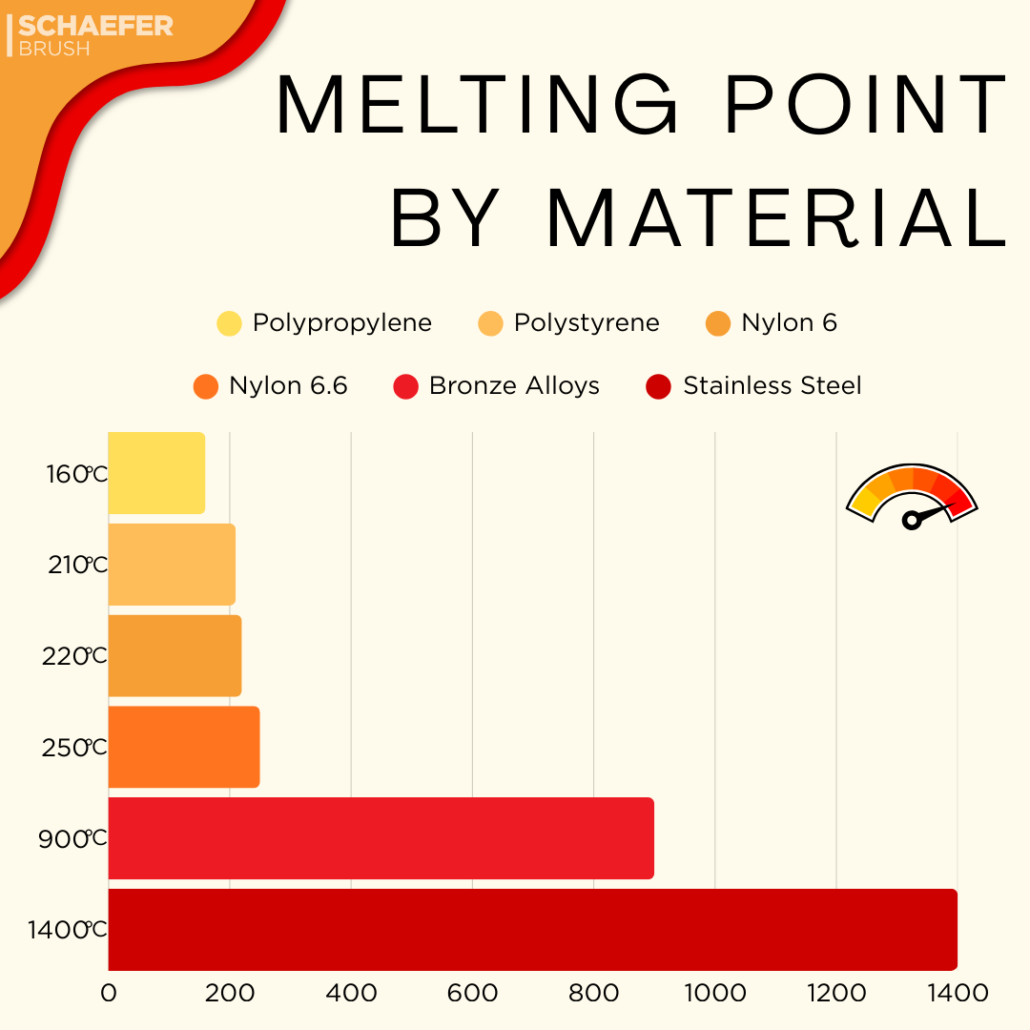
Melting Point by Material: A Quick Breakdown
Here’s a simplified look at the temperature resistance of common brush materials:
Polypropylene ~ 320°F
Polystyrene ~ 350°F
Nylon 6 ~ 410°F
Nylon 6.6 ~ 495°F
Bronze Alloys ~ 900°C
Stainless Steel – Up to ~1400°C
Matching Material to Application: Where to Start
If you’re exploring brush options for the first time or simply want to improve the performance of your current process, begin with these questions:
- What temperatures does the brush encounter during use?
- Is heat steady or does it vary (e.g., friction spikes)?
- What’s more important — flexibility, chemical resistance, or structural strength?
- Is the brush used manually or in automated equipment where heat builds up faster?
Understanding these baseline conditions helps narrow down the right material early in the decision process.
Know the Basics Before You Select a Brush
Great performance starts long before a brush reaches the production floor.
It begins with awareness, which means understanding the fundamental differences between materials and how heat affects them.
As you continue exploring brush options, keep heat tolerance in mind as a foundational selection factor. With the right material, you can improve consistency, extend tool life, and reduce unexpected downtime.
Heat tolerance is just one of many factors that influence brush performance. If you’re looking to improve consistency, reduce downtime, or better understand which materials fit your application, we’re here to help.
Explore more insights, tools, and resources from Schaefer Brush — or reach out to our team if you’d like guidance on selecting the right brush material for your process.






Leave a Reply
Want to join the discussion?Feel free to contribute!