
How Small Brush Design Variations Make a Big Difference in Industrial Applications


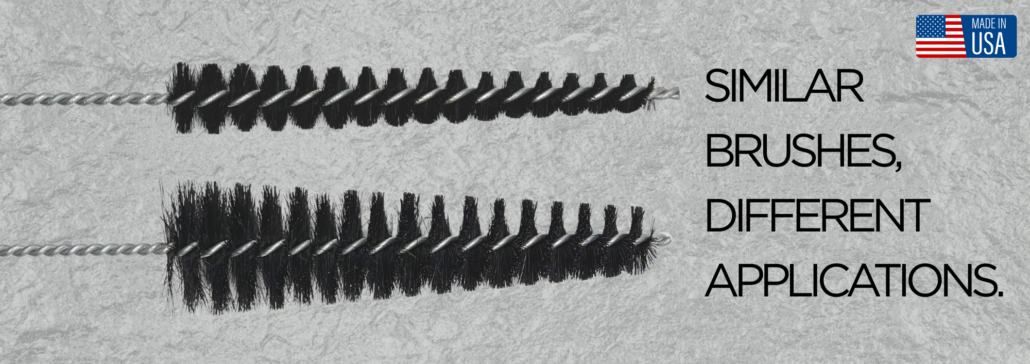
In industrial cleaning, finishing, and surface preparation, performance rarely comes down to a single factor. More often, results are shaped by a combination of small, deliberate design decisions working together.
One of the most common issues we see across manufacturing environments isn’t poor workmanship or inadequate processes—it’s using a brush that isn’t properly engineered for the application.
Two brushes may appear nearly identical at a glance, yet deliver very different outcomes once they are put into service. Understanding the design variables behind those differences is essential to improving consistency, efficiency, and brush life.
Below are four key brush design elements where small variations can make a measurable imp
1. Filament Material: Matching the Brush to the Task
Filament material is one of the most critical factors in brush performance. The type of filament selected directly affects aggressiveness, durability, chemical/heat resistance, and surface interaction. (Read more about melting points of materials here > Understanding Heat Tolerance in Brush Materials – Schaefer Brush).
For example:
- Nylon filaments offer flexibility and resistance to many chemicals, making them ideal for general cleaning and delicate surfaces.
- Abrasive‑impregnated filaments provide controlled cutting action for deburring or surface preparation.
- Wire filaments deliver high aggressiveness for heavy buildup, scale, or rust removal.
A filament that performs well in one environment may wear prematurely – or damage even the surface in another. Proper selection requires understanding not just the surface being cleaned, but also operating conditions such as temperature, moisture, and contaminants present. Our Expert engineers are ready to help design a brush with the perfect filament for your needs.
2. Fill Density: Balancing Force and Flexibility
Fill density refers to the number of filaments packed into a brush. While higher density may seem like an automatic upgrade, that isn’t always the case.
- High fill density can increase contact force and cleaning power but may reduce flexibility and accelerate wear in certain applications.
- Lower fill density allows filaments to conform to irregular surfaces and reduce stress on sensitive components.
In rotating or conveyor-based systems, incorrect fill density can lead to inconsistent cleaning, increased power consumption, or premature filament fatigue. Optimizing density before manufacturing fixes many performance problems and makes brushes last longer and clean better.
3. Trim Length: Controlling Engagement with the Surface
The exposed length of the filament has a direct impact on how a brush behaves in operation.
- Shorter trim lengths increase stiffness and aggressiveness, providing stronger mechanical action.
- Longer trim lengths enhance flexibility, allowing filaments to sweep, glide, or follow contours more effectively.
A small adjustment in trim length can mean the difference between effective cleaning and uneven results. In some cases, it can also reduce vibration and extend brush life by minimizing excessive filament deflection.
4. Backing and Construction: Supporting Long-Term Reliability
The backing or construction of a brush determines how it integrates with equipment and holds up over time.
Twisted-in wire brushes, staple-set constructions, and custom brush systems each offer distinct advantages depending on the application. Factors such as mounting method, operating speed, exposure to moisture, and required rigidity all influence the best construction choice.
An otherwise well-designed brush can underperform or fail prematurely if the backing or assembly is not matched to the operating environment.
Talk With an Engineer About Your Application
If you’re facing inconsistent cleaning, premature brush wear, or surface quality issues, it may be time to take a closer look at the design details.
Contact Schaefer Brush to discuss your application with our engineering team and explore a solution engineered for your process.




Leave a Reply
Want to join the discussion?Feel free to contribute!