
Why Coil Fin Spacing Matters When Selecting HVAC Brushes


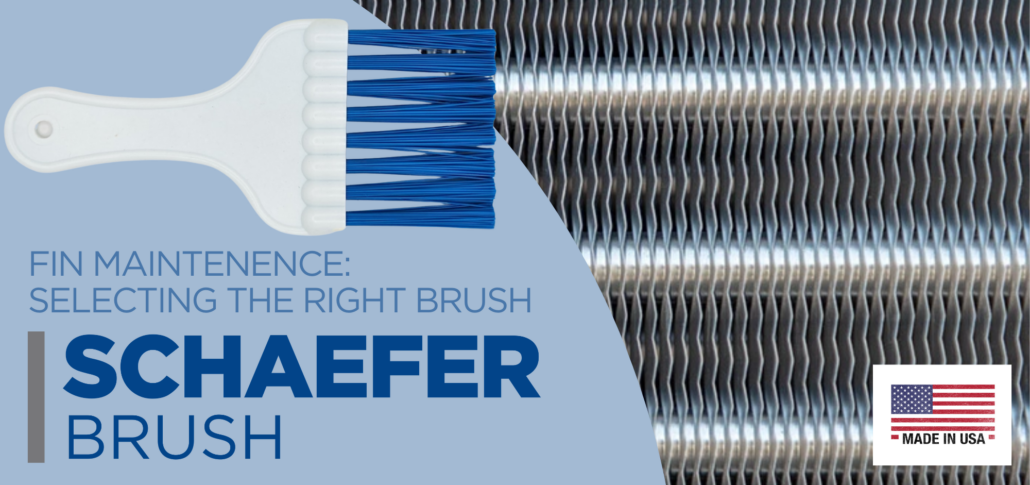
MRO Focus: Getting the Most Out of Coil Maintenance
When HVAC coils get dirty, system performance pays the price. Dust, pollen, and greasy film build up on coil fins, restricting airflow and making the unit work harder than it should. Most MRO teams know that routine coil cleaning is essential — but there’s one detail that tends to get overlooked:
The spacing between coil fins should guide your brush choice.
It sounds simple, but matching the brush to the fin spacing can be the difference between a smooth cleaning job and accidentally damaging equipment.
Let’s break down why fin spacing matters and how it helps you pick the right brush for the job.
What Do We Mean by “Fin Spacing”?
Coils are built with rows of thin aluminum fins wrapped around copper tubing. These fins pull heat away from the refrigerant — that’s why they’re packed closely together.
Different equipment has different spacing:
- Residential units: often 14–20 fins per inch (FPI)
- Commercial units: usually 18–24 FPI
- High‑efficiency or specialty systems: 25+ FPI
Knowing the fin density gives you a quick sense of how gentle or aggressive your brush can be.
Why Brush Selection Depends on Fin Spacing
1. It Prevents Bent or Crushed Fins
Anyone who’s ever brushed the wrong coil knows how fast those delicate fins can fold over.
A brush that’s too stiff for a tightly spaced coil can:
- Bend the fins
- Reduce airflow
- Force the system to work harder
- Reduce overall system efficiency
Once fins bend, it takes time — and patience — to straighten them back out. The right brush helps avoid that entirely.
2. You Get a Cleaner Coil with Less Effort
Coils with wide spacing can handle a brush with stiffer bristles.
Tight‑spaced fins? They need a brush that’s soft and fine enough to move between the fins without catching.
When the brush matches the spacing:
- Debris lifts out instead of being pushed deeper
- You make fewer passes
- Cleaning feels smoother and more controlled
It saves time and keeps the job from feeling like a wrestling match.
3. It Cuts Down on Labor Time and Rework
MRO teams know the value of efficiency. The wrong brush often leads to:
- Snagged fins
- Slower cleaning
- More risk of accidental damage
A properly matched brush keeps things simple: steady strokes, a cleaner coil, and no unexpected repairs.
How Schaefer Brush Designs for Real‑World Coil Maintenance
At Schaefer Brush, we build coil cleaning brushes with the everyday realities of HVAC maintenance in mind. That means designing tools that respect the fin structure while still delivering a thorough clean.
Here’s how:
✔ Bristle options for every fin density
Soft nylon bristles for high‑FPI coils, and firmer bristles for wider‑spaced commercial coils.
✔ Widths that fit the job
From compact brushes for tight service areas to wider options for large rooftop units.
✔ Materials that protect aluminum fins
Non‑marring, durable bristles that remove debris without scraping or gouging the surface.
These features help technicians clean confidently, knowing they’re using a brush built specifically for the task.
The Bottom Line
Fin spacing isn’t just a technical detail — it’s one of the most important factors when choosing an HVAC coil brush. By using a brush that matches the coil’s fin density, you can:
- Protect delicate fins
- Clean more efficiently
- Extend equipment life
- Improve system performance
It’s a small adjustment that makes a big difference in the field.
Contact us Now!
Contact us to talk to a team member to explore different options in fin spacing that are best for you!




Leave a Reply
Want to join the discussion?Feel free to contribute!